
New Feature Simplifies Report Setup for SEOs
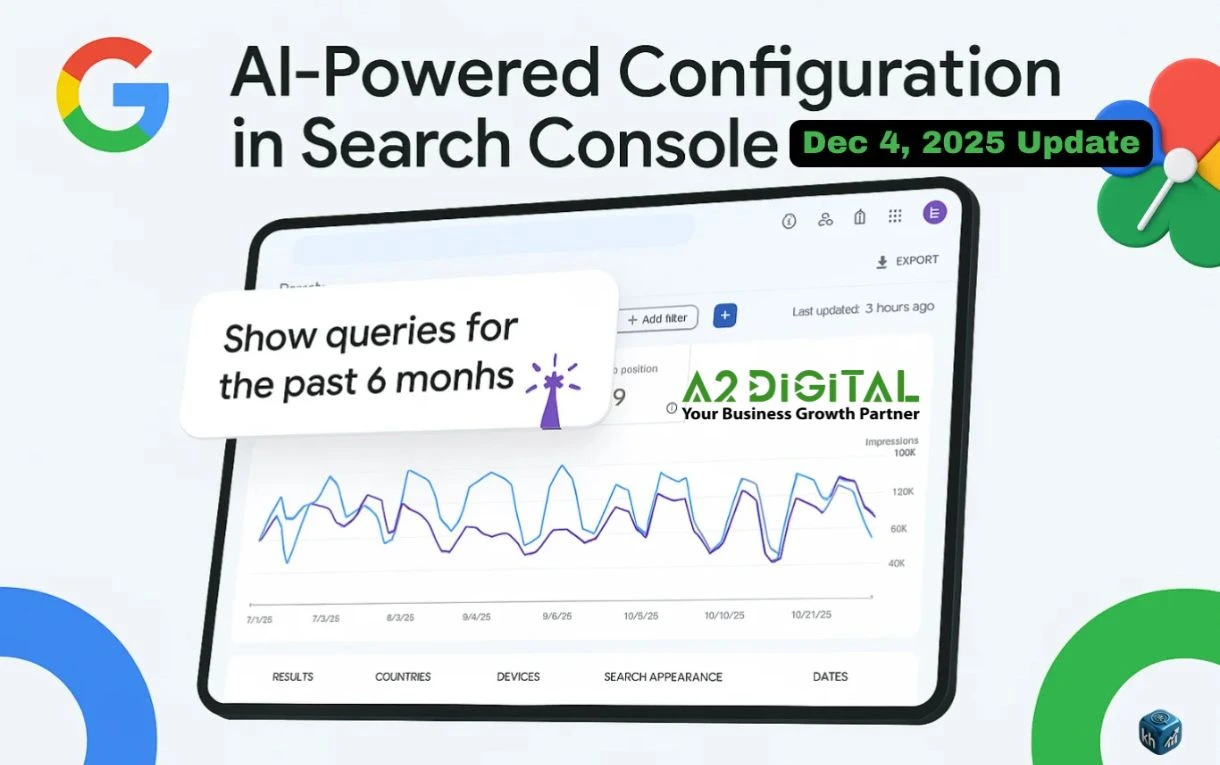
In a remarkable decision, Google Search Console (GSC) — the popular tool for tracking website search performance — has at last come out with an AI-driven configuration feature that allows users to prepare their Search performance reports just by sending their requests in plain language. Rather than selecting filters and parameters, Google Search Console now provides an opportunity for marketers to make a request of the report they desire—say, “show mobile traffic from India for the last three months with queries containing ‘digital marketing'”—and let the system do the setup automatically.
This new feature is part of Google’s broad plan to implement AI in its Search and analytics tools and eventually make it easier for google search console to get access to data and utilize it in an simple and efficient manner.
What Exactly Does the AI-Powered Configuration Do?
With the new feature, you can refine performance data by parameters such as query, page, country, device, search appearance, or date range — all through natural-language prompts. For example:
“Show me queries on phone searches that contain the word ‘sports’ in the last 6 months.”
Behind the scenes, Google translates your plain-language instruction into the appropriate filters.
Automatic Comparisons & Metric Selection
You can also request comparisons and custom metric displays. For instance:
- “Compare traffic for my pages that contain ‘/blog’ for this quarter vs the same quarter last year.”
- “Display the Average CTR and Average Position of my queries in Spain for the last 28 days.”
It eliminates the need for switching through many drop-downs or recalling the filters’ combinations you applied previously.“Display the
Current Limitations & What Marketers Should Know
However, the feature isn’t all-encompassing. As of now:
- It works only for the Search results Performance report. It does not support Discover or News reports.
- It is not able to perform table sorting or data export via natural-language prompts — thus manual agency will still be required for some workflows.
- Due to the testing and gradual rollout of the functionality, only a few site owners will have access to it at once.
Google also alerts that the AI could at times get a request wrong, and thus it is good to check the filters set before taking the data as valid.
Why This Update is Critical: Its Implication for SEOs and Website Owners
For SEO professionals, content creators, and digital marketers — especially agencies and small businesses — this update could be a big time saver.
- Faster reporting: Instead of remembering previous filter setups or recreating complex reports, you can simply ask in plain English and get the data instantly.
- Easier access to analytics: Not even a technical background is required for the website owner to produce valuable information via GSC, besides no training or deep knowledge is needed.
- Enhanced decision-making speed: Faster access to tailored data — e.g. device or region-based traffic, date comparisons, etc. — allows you to be much quicker in your reactions to performance trends, campaign results, or content-promotion needs.
For agencies managing multiple client websites, this could streamline regular reporting cycles, saving time and reducing manual errors.
However — because this feature is still experimental and may misinterpret some prompts — it should be used as a convenience tool first, not a replacement for careful analysis.
What’s Next: What to Watch for
As of now, Google has rolled out this AI-powered configuration to a limited set of websites, with plans to expand access gradually.
It’s likely we’ll see additional functionality in the future — such as support for other report types (Discover, News), more advanced configuration options (sorting, exporting), or even deeper AI-driven analytics. For now, taking advantage of this new feature for Search results reports is a smart move for anyone serious about SEO or digital marketing analytics.
Source: Search Engine Journal – Google Adds AI-Powered Configuration To Search Console – December 4, 2025.